What to know before you choose
- Map cable destinations and moving equipment first.
- Measure the underside as well as the desk edge.
- No-drill methods still have surface and fit requirements.
Map every cable before choosing products
List the devices on the desk and where each cable needs to go. Separate power connections from the other connections in your notes, and identify which objects move during ordinary use. Read the equipment instructions before changing the arrangement. A tidy route should still allow supported connections, access and normal movement. Hiding a cable is not useful if it creates strain or makes an essential port difficult to reach.
Measure the desk edge and underside
Record the tabletop thickness, edge shape and space occupied by supports, drawers or other fittings. Compare those conditions with the mounting guidance of the organizer you are considering. A clamp needs suitable clearance, while an adhesive product needs a compatible surface and application process. No-drill is a mounting description, not a guarantee that every method works on every desk or removes without a trace.
Allow for the full movement range
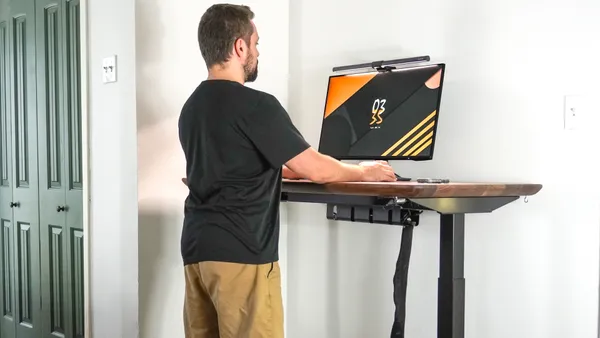
If any part of the setup moves, assess the cable route in all of its intended positions before securing it. Follow the desk and equipment manufacturers’ guidance, and avoid turning a loose loop into a pulled connection. Keep access to components that need regular attention. The required arrangement depends on the actual devices and route, so do not copy a fixed cable length from an unrelated setup.
Choose the smallest suitable organizer
Select a product that solves the mapped problem and fits the measured space. Check its current mounting, load and surface guidance, along with return conditions. Install it only as directed and keep important connections accessible. Review the route after using the desk normally. This guide does not certify a mounting method or electrical arrangement; it helps you ask the right fit questions before choosing one.